
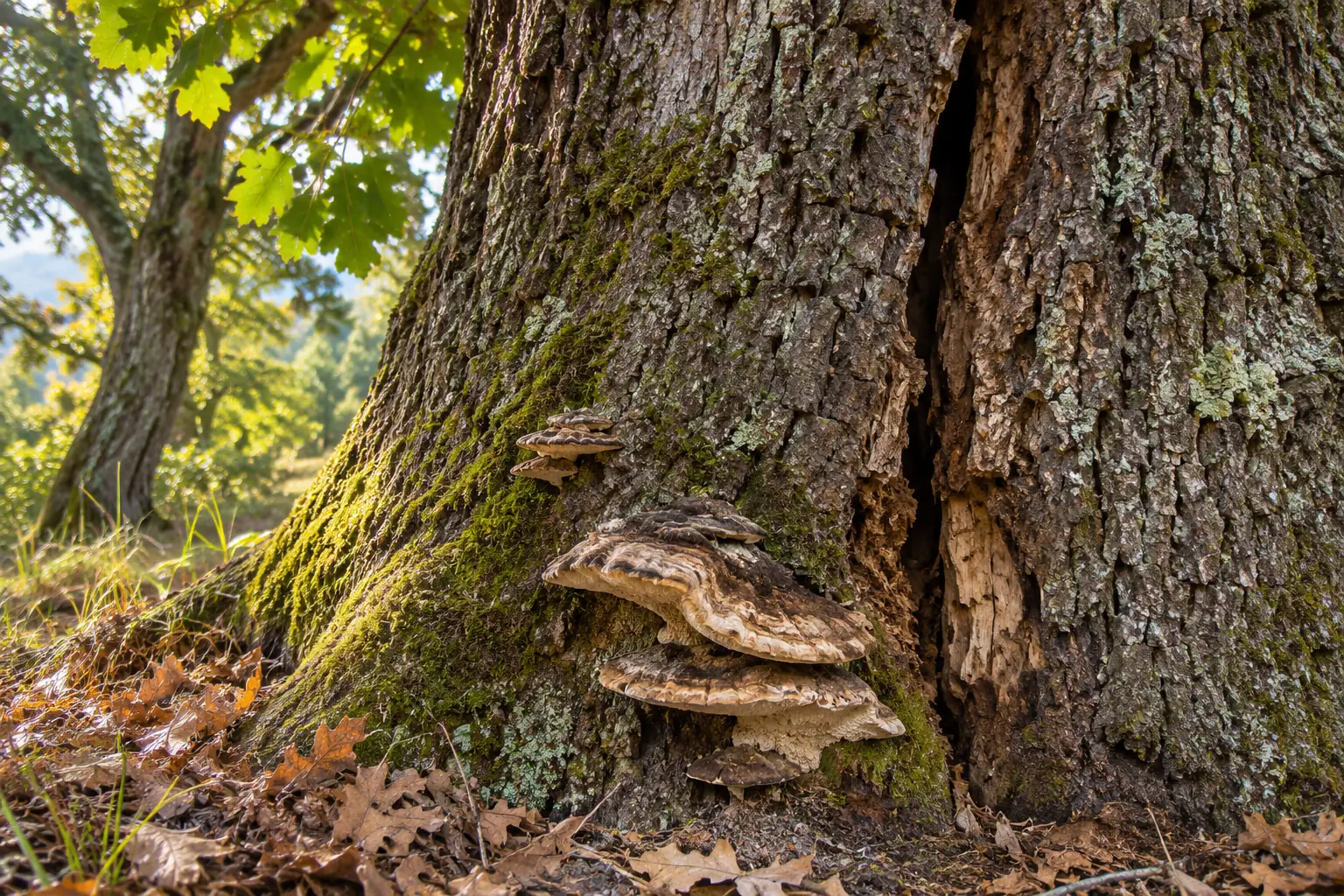
A hazard tree is a tree with a structural defect that could make all or part of it fail, close enough to hit a house, car, driveway or place where people spend time. The main warning signs are dead wood, cracks, weak branch unions, decay, cankers, root problems and a lean or shape that throws the tree off balance.
That definition comes from the U.S. Forest Service publication How to Recognize Hazardous Defects in Trees (NA-FR-01-96), and the checklist below follows its seven defect types. The publication says its guidelines are not absolute rules and recommends a professional arborist when in doubt. Tree Removal Medford is a free referral service, not a tree company, and it connects callers with an independent, CCB-licensed local tree company that can look at the tree in person. More on how that works is on the home page.
What makes a tree a hazard
A tree becomes a hazard when a defect and a target meet. The Forest Service publication says a defective tree is not hazardous unless some part of it is within striking distance of a target, such as a building, vehicle, street, backyard or a spot where people gather.
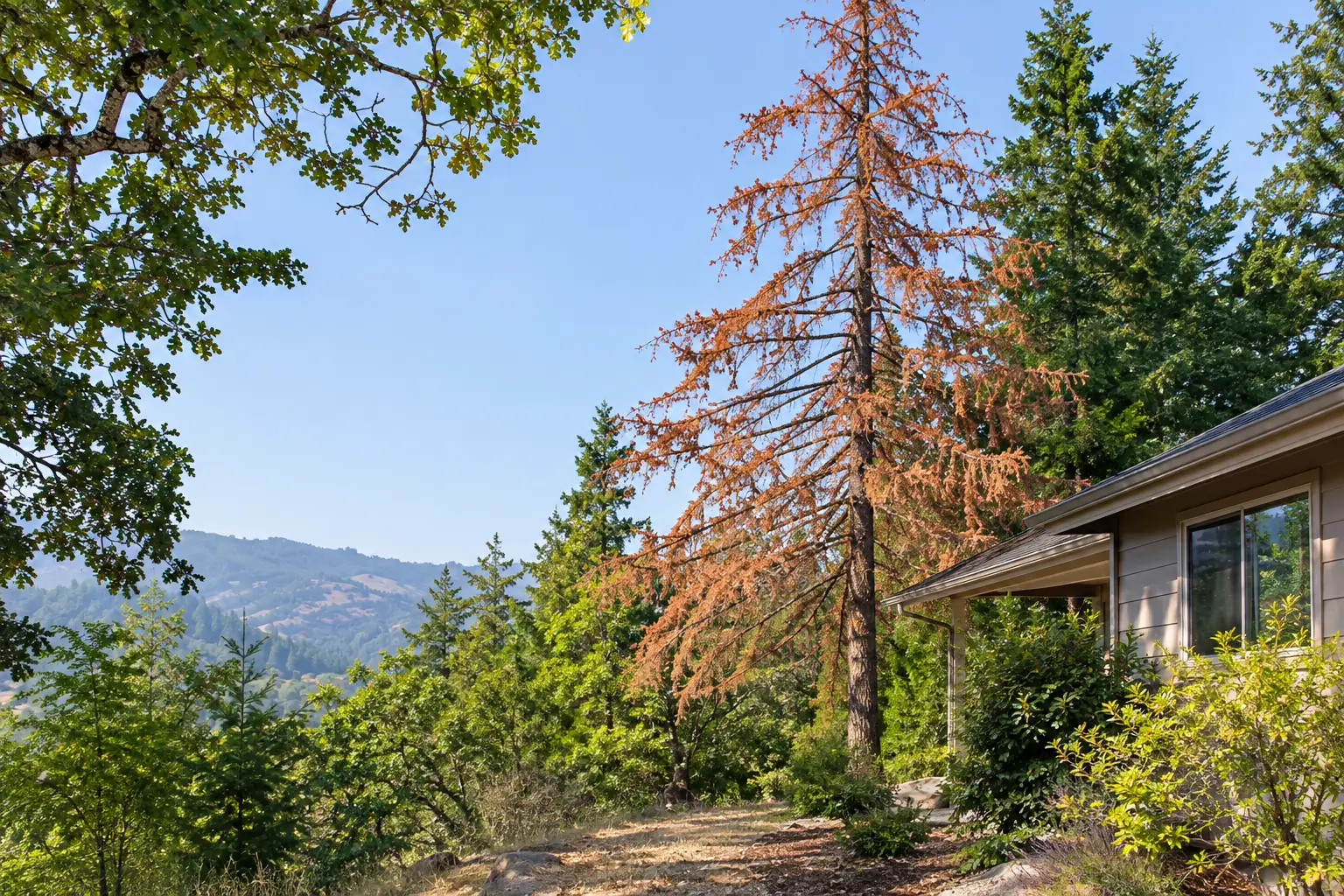
So check two things for every tree you are worried about: what is wrong with it, and what it would hit if it or a big limb came down. A cracked oak at the back of a field is a lower priority than a cracked oak over a bedroom.
The walk-around checklist
The Forest Service recommends looking at every part of the tree, from the roots and trunk flare to the main stem, branches and branch unions, on all sides. Binoculars help with high limbs. Use this list on your walk.
- Dead trees and dead limbs. The publication calls dead wood "not negotiable." Take action right away if the tree is dead, if a dead branch is big enough to hurt someone, or if a broken branch or top is hung up in the canopy. These hung-up pieces are often called hangers or widow makers.
- Cracks. A crack is a deep split through the bark into the wood. Take action if a crack runs deep into or through the stem, if two or more cracks sit in the same area, or if a crack touches another defect.
- Weak branch unions. Look for two similar-sized, upright stems growing tight together with bark pinched between them. That included bark is weaker than wood and can act as a wedge. A weak union on the main stem, or one that is cracked, needs attention.
- Decay. Soft, punky or crumbly wood, open cavities, and mushrooms, conks or brackets on the trunk, root flare or branches all point to advanced decay. The publication flags a stem where the sound wood is less than 1 inch thick for every 6 inches of diameter.
- Cankers. A canker is a spot where the bark is sunken or missing. A canker that wraps more than half of the trunk can be a hazard even if the exposed wood looks sound.
- Roots and the base. Watch for soil heaving or mounding at the base, a recent lean with exposed roots, roots cut or crushed by trenching or driveways, and decay in the big buttress roots. The publication says trees with more than half their roots under the crown cut or crushed are dangerous.
- Lean and shape. A tree that leans badly, or has one large limb far out of proportion with the rest of the crown, may be structurally weak. Not every leaning tree is dangerous, so have a leaning tree you are worried about checked in person.
- More than one problem. Defects that touch or sit near each other are the most serious. The publication says that if more than one defect occurs on the main stem, you should assume the tree is extremely hazardous.
- The target. Finish by looking at what is under and around the tree: the roof, the bedroom, the driveway, the play area, the fence, the power lines.
A full green crown does not prove a tree is safe. The Forest Service notes that trunks and branches can be badly defective and still carry lush foliage.
When to inspect
The publication recommends inspecting trees every year, with the best times after leaf drop in fall, after leaf-out in spring, and after severe storms.
Tree problems in the Rogue Valley
The biggest local tree problem in recent years is the decline and death of Douglas-fir on dry sites around the valley. OSU Extension's publication Trees on the Edge (EM 9406), published in September 2023, says the die-off is concentrated in Jackson, Josephine and Douglas counties. Decline is most common and severe on hot, dry sites on the margins of the Rogue, Applegate and Umpqua valleys. The most severe dieback is in the Applegate Valley and the fringes of the Bear Creek Valley, and most of the mortality has been on rural residential properties, small woodlands and BLM land near the Rogue Valley.
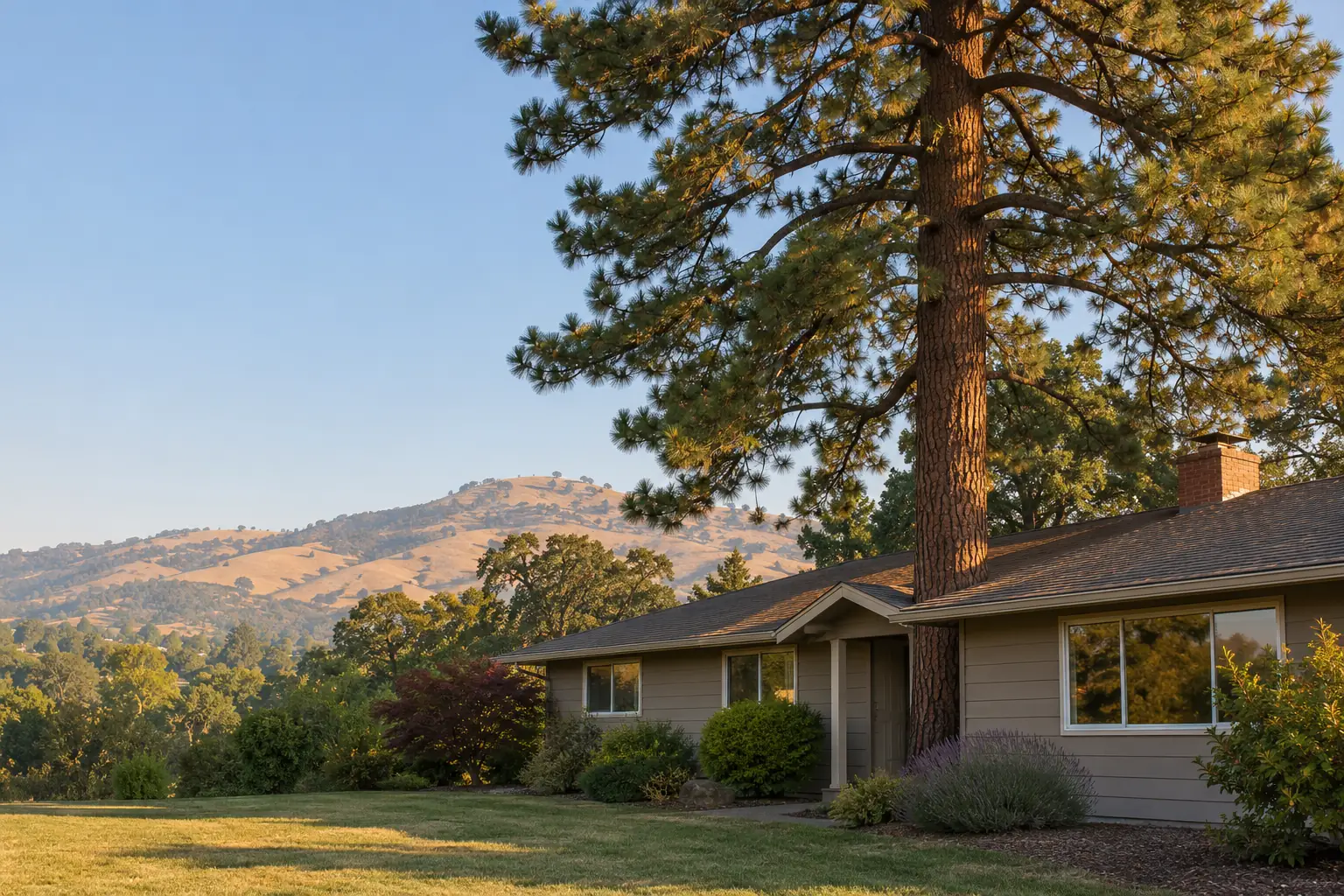
OSU names three causes working together: harsh, water-stressed sites, hotter drought and insects, mainly the flatheaded fir borer. Areas with less than 35 inches of rain a year and below 3,500 feet of elevation are at highest risk. A January 2025 OSU Extension summary of the research says the flatheaded fir borer is the primary insect linked to Douglas-fir death and that mortality areas are likely to increase significantly over the next 30 years.
Signs of Douglas-fir decline
These are the symptoms OSU lists, and they are worth knowing if you have firs on a dry lot in or around Medford:
- Dying branch tips or whole branches, with needles that turn red and then gray as they fall
- A thinning crown or yellowing needles
- A dead top
- Lots of small pitch droplets in the bark cracks, especially on trees that already show crown decline
- Woodpeckers flaking off bark
OSU says that once bark flaking shows up, death is almost certain, and that trees with these symptoms in areas of ongoing mortality are likely to die within one to two years. OSU also notes that mature pines, madrones and oaks on the same sites may stay healthy.
Trees after a wildfire
Fire-damaged trees need their own check. OSU Extension's guide Learn to Recognize Hazard Trees After a Fire (EM 9558) explains that a tree still alive after a fire should not automatically be treated as low risk. Burned-out roots, hollowed trunks and loose overhead limbs are all reasons for caution.
Dead trees, fire and your home
A dead tree near your house is a fire problem as well as a falling problem. The OSU summary notes that dead and fallen trees raise wildfire risk, particularly where annual rainfall is under 35 inches. The Oregon State Fire Marshal's guidance on keeping space around homes is in the defensible space and fire season guide, including rules on when power saws can run during fire season.
What not to do yourself
Some hazard tree work is not a homeowner job, even with a good saw. Do not climb a tree with dead or cracked limbs, and do not try to drop a leaning or decayed tree toward a house. Never prune or cut anywhere near a power line. Pacific Power and OSHA both warn against it, and the trees near power lines guide explains who to call.
Do not top the tree to make it shorter. The Forest Service publication explains that topping leaves stubs that decay and weakly attached new branches, which can create the very defects you were trying to avoid.
When to call
How fast to call depends on what the tree could hit and how bad the defect is. Treat these as emergencies:
- A tree or large limb has fallen on a house, garage, car, fence or other structure
- A tree is blocking a driveway or road
- A tree is cracked, uprooted or leaning after a storm and could fall on a home or where people are
- A broken limb is hanging over a roof, driveway, yard or play area
- A tree is down on or against power lines. Move 35 feet clear, dial 911, and afterward ring Pacific Power at 1-877-508-5088. A tree company works only after the utility makes the line safe.
For those, see the emergency tree removal page.
These are not emergencies, but they deserve a call soon: a dead tree in reach of the house, a crack or cavity in the main trunk, mushrooms at the base, a new lean or soil heaving, or a Douglas-fir with red needles and bark flaking. A dead or leaning tree that has looked the same way for weeks is not an emergency, but it is still worth an estimate. The hazard tree removal page covers that kind of job.
If the problem tree is a street tree in the right-of-way, Medford requires a free city permit before removal. The permit guide explains the steps.
Options besides removal
Removal is not always the only fix. The Forest Service publication lists four corrective actions: move the target, prune the tree, remove the tree, or add cabling and bracing.
To reach a licensed local tree company that can look at the tree, call (541) 200-0074. Find out on the call if coming out to quote carries a charge. With a tree that has not yet fallen there often is none. Ask the company for its CCB number, and you can check it on the Oregon CCB license search.
Frequently asked questions
How can I tell if a tree is about to fall?
No checklist can promise when a tree will fail. The strongest warning signs in the Forest Service guide are cracks through the trunk, a new lean with soil heaving or exposed roots at the base, advanced decay or mushrooms at the root flare, and more than one defect on the main stem. Any of those near a house calls for an in-person look soon.
Is a dead tree always a hazard?
A dead tree is a hazard whenever it, or its branches, can reach something or someone. The Forest Service publication says dead trees and large dead branches can break and fall at any time and should be dealt with right away. A dead tree far from any target is a lower priority.
Why are so many Douglas-firs dying around Medford?
OSU Extension research links the die-off to harsh, dry sites, hotter drought and insects, mainly the flatheaded fir borer. The worst decline is on hot, dry sites around the edges of the Rogue, Applegate and Bear Creek valleys, below 3,500 feet and where rainfall is under 35 inches a year.
What does it mean when a fir's needles turn red?
In the Rogue Valley, red needles on dying branch tips or a dead top are signs of Douglas-fir decline. OSU Extension says needles turn red and then gray as they fall, and that trees with these symptoms in areas of ongoing mortality are likely to die within one to two years.
Is a leaning tree dangerous?
It depends on the lean. The Forest Service guide says not all leaning trees are dangerous, but a tree that leans with recent root exposure, soil movement or soil mounding near the base needs action. A lean that appeared after a storm is a more urgent sign than a slow lean the tree has had for years.
Can a hazard tree be saved instead of removed?
Some can. The Forest Service publication lists pruning and cabling or bracing as options next to removal, along with moving whatever the tree could hit. Whether a given tree can be saved depends on the defect, and the company that inspects it can tell you what it recommends.