
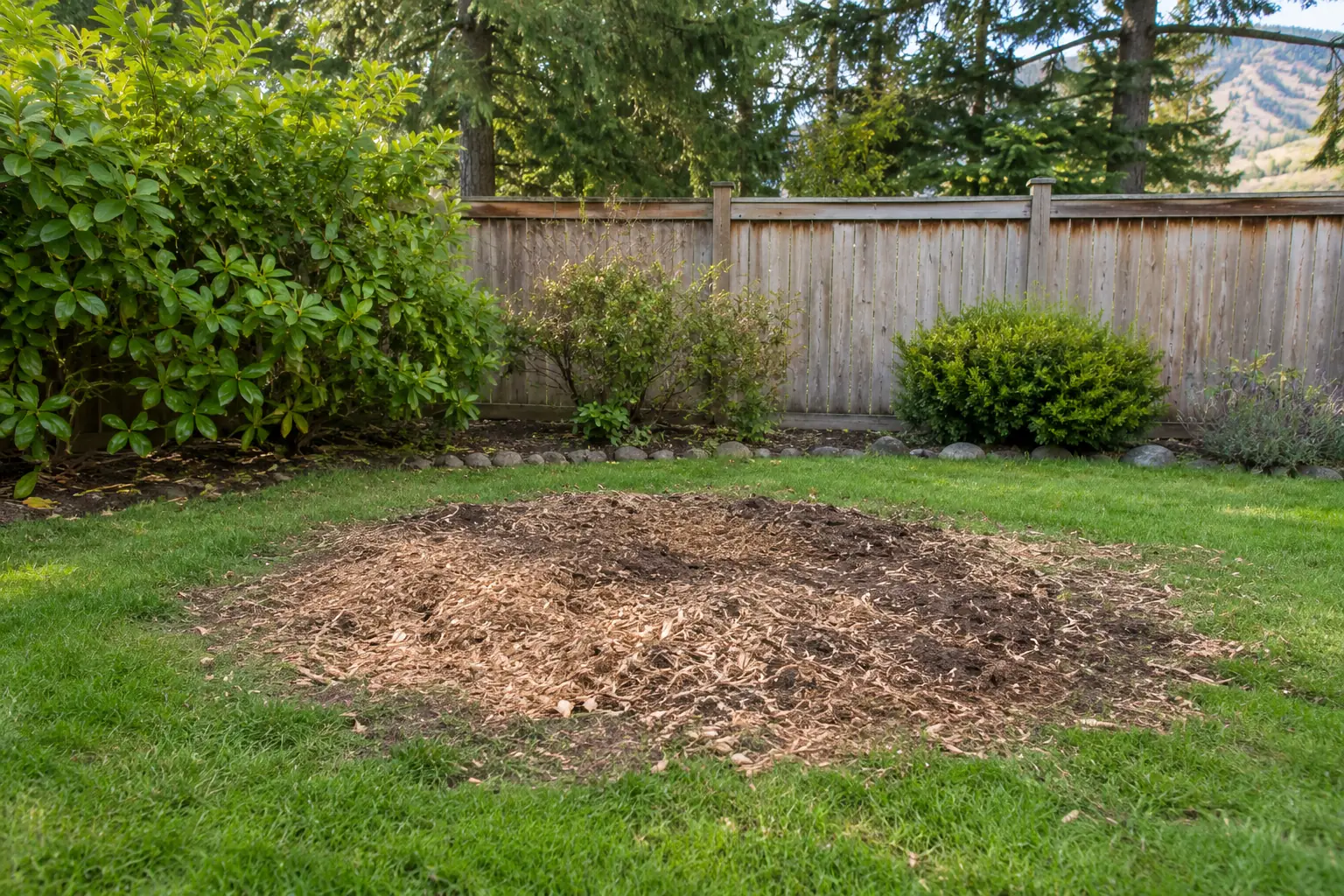
Stump grinding in Medford cuts the stump down below the soil with a machine and leaves a pile of wood chips and soil, while full stump removal digs out the stump and its main roots. Grinding is the more common choice after tree removal. Call (541) 200-0074 to reach a tree service, a lone independent company carrying a CCB license, and ask for a stump price. Small quotes like this are usually free, but check before anyone drives out.
Tree Removal Medford is a free referral service. It connects you with a local company that does the work; it does not grind stumps itself. This page explains the difference between grinding and removal, how deep a grinder goes, why utility locates come before any grinding, and what you will have in the yard afterward. For an overview of every service, start at the home page.
Stump grinding versus full stump removal
Grinding takes the stump down to below ground level and leaves the roots in the soil to rot. Full removal pulls out the stump and the larger roots, which leaves a hole that has to be filled. Most homeowners choose grinding because it disturbs less of the yard.
| Stump grinding | Full stump removal | |
|---|---|---|
| What happens | A rotating cutter chips the stump away below the surface | The stump and main roots are dug or pulled out |
| What is left | A shallow hole filled with wood chips and soil | A larger hole, often with torn-up soil around it |
| Roots | Stay in the ground and decay over time | Larger roots come out with the stump |
| Yard disturbance | Mostly limited to the stump area | Usually more, since roots spread out |
| Common use | Lawns, garden beds, most yards | Building, paving, or replanting in the exact spot |
Full removal is more often chosen when something will be built where the stump stood, or when root disease was the reason the tree came out. The Royal Horticultural Society advises that soil-borne diseases generally call for removing the tree, the stump and the large roots (RHS, removing trees and stumps). The U.S. Forest Service notes that Armillaria mushrooms grow in clusters at the base of infected trees and stumps (USDA Forest Service). If your tree died from a root problem, ask the company whether grinding alone is enough.
How deep a stump gets ground
Grinding depth depends on what you want to do with the spot afterward. There is no single right number, and you should tell the company your plan before it starts.
Published guidance gives a sense of the range:
- The Royal Horticultural Society says grinding to about 20 to 25 cm (roughly 8 to 10 inches) below ground is normally enough for laying turf, and at least 30 cm (about 12 inches) is needed for replanting or landscaping (RHS).
- A University of California weed-control guide says to keep grinding until the hole is at least 4 inches below ground level to prevent resprouting, for trees that sprout back from the stump (UC WeedCUT, stump grinding).
Bigger trees generally need deeper grinding, because the root flare spreads wider and lower. Some things can limit depth, such as rock close to the surface, a nearby foundation, or a utility line. If you plan to plant a new tree, the company may suggest a spot a few feet away from the old stump rather than the same hole.
Ask how far out from the stump the grinder will go. Surface roots that run across the lawn can be ground too, but each one adds time.
Call 811 before grinding or digging
Before anyone grinds a stump or digs in your yard, the underground utilities should be located and marked. In Oregon, you contact the Oregon Utility Notification Center by dialing 811 or 1-800-332-2344, or by submitting a request online at Oregon811.com (Oregon Utility Notification Center FAQ).
The timing rule is set by the state program. Contact the center at least two full business days, and not more than 10 business days, before digging. The center then notifies the utilities so they can mark their lines. Pacific Power gives the same reminder to call 811 at least 48 hours before digging or planting (Pacific Power tree pruning and planting).
Oregon's homeowner exemption is narrow. According to the notification center, a homeowner does not have to call only when all of these are true: the digging is by the owner or tenant, on their own private property, less than 12 inches deep, and not within an established easement. A stump grinder run by a contractor is not covered by that exemption, so ask the company whether it has requested locates and wait for the marks.
The utilities mark their lines only up to the meter or to the connection point of your private service. Private lines past that point, such as sprinkler pipes, landscape lighting, or a buried line to a shop or well pump, are not part of the public locate. Tell the company where you know those lines run. The center's FAQ also links to private utility locators if you need those lines found.
What is left behind after grinding
After grinding, the stump is replaced by a mound or hole full of wood chips mixed with soil. The UC guide describes it as an excavated hole of wood chips and dirt (UC WeedCUT).
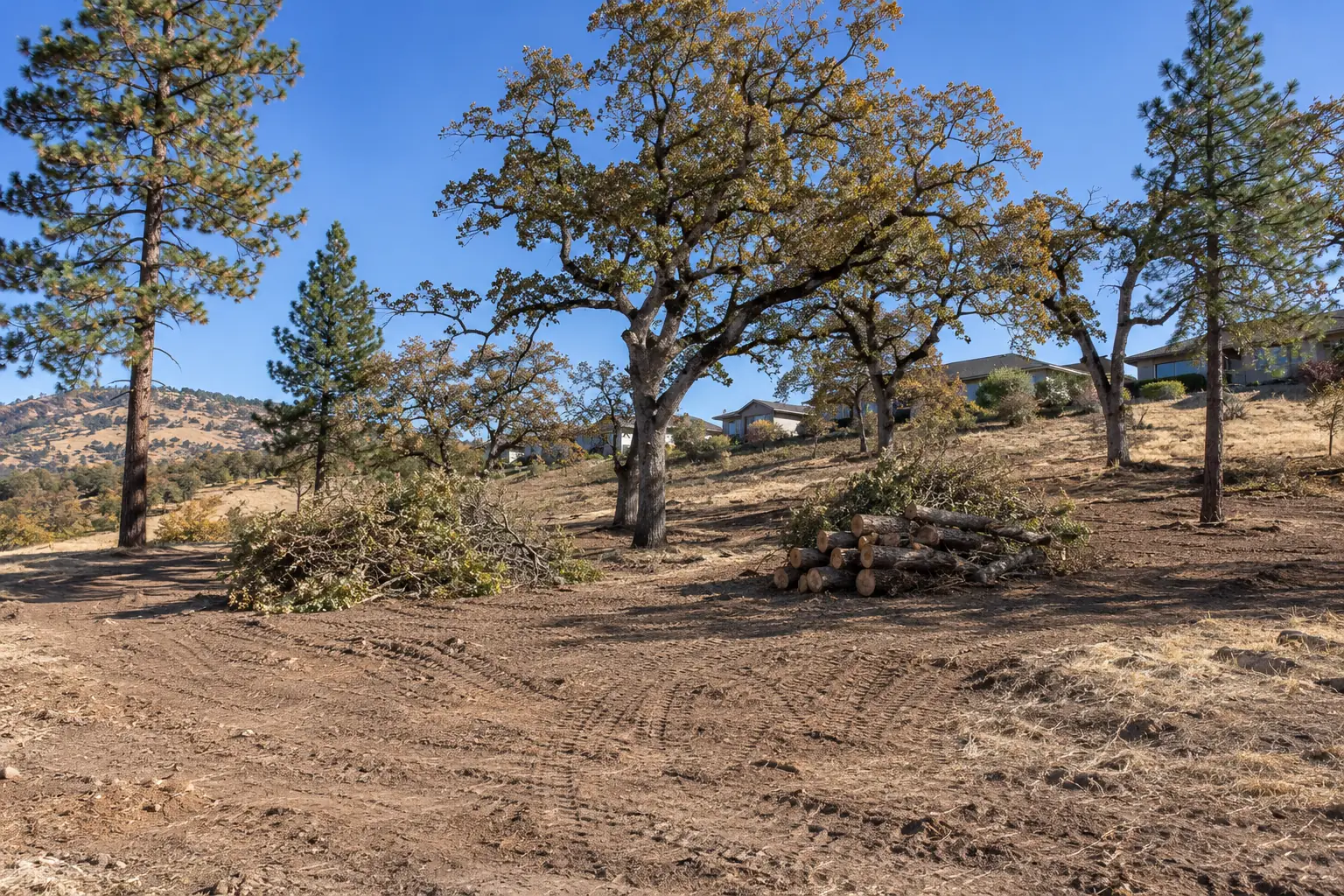
What you do next depends on the plan for the spot:
- For grass. Iowa State University Extension says to remove the wood chips as thoroughly as possible before planting grass, add quality topsoil to replace what was ground out, and mound the area slightly above the surrounding grade to allow for settling (Iowa State Extension, planting grass after stump removal). It also notes that wood debris can temporarily tie up nitrogen the grass needs.
- For a garden bed. The same chip problem applies. Clear out most of the grindings and bring in soil before you plant.
- For mulch. Many people spread the chips on beds or paths. Ask the company whether it will leave the chips, rake them into the hole, or haul them away.
Expect the ground to sink over time. Purdue Extension says there will be significant settling below the stump as it decays, that full decomposition can take several years, and that soil should be added to replace the stump and roots, with a little extra mounded on top (Purdue Extension). You may need to top up the spot with soil more than once.
Why stump grinding is often quoted with the removal
Many companies price stump grinding as part of the tree removal estimate because the crew is already on site and the job is easier to plan in one visit. Some include it in the main price. Others list it as a separate line, and some do not grind stumps at all and leave that to another company.
When you get an estimate for tree removal, read it closely for the stump. A few things to check:
- Is the stump included, or is it an extra line?
- If it is included, how deep will it be ground?
- Will the chips be left, spread, or hauled away?
- Will surface roots be ground too?
- Who requests the 811 locates, and when?
Getting both done in one job can also mean fewer visits to your yard and one set of locate marks. If you are still deciding on the tree itself, read large tree removal near homes or hazard and dead tree removal.
What affects the price of stump grinding
The price of stump grinding depends on the stump and the spot it sits in. The company's estimate is what counts, but these are the usual factors:
- Diameter. Wider stumps take longer to grind.
- Depth. Grinding deeper for replanting takes longer than grinding for grass.
- Wood and condition. Hard, dense stumps take longer than soft, rotting ones.
- Surface roots. Each root ground out adds time.
- Access. A grinder has to reach the stump. A narrow gate, steps or a steep slope can mean a smaller machine and more time.
- Number of stumps. Several stumps in one visit are usually priced together.
- Cleanup. Hauling the chips away costs more than leaving them.
- Rock and debris. Stones or old fencing buried in the stump can slow the work.
For more on what drives the total for a removal job, read the tree removal cost guide for Medford. Ask the company for its CCB number and check it at the Oregon CCB license search. Oregon's Landscape Contractors Board notes that removing trees and grinding stumps can be done under either an LCB or a CCB license (Oregon LCB, tree work FAQ).
When a stump can stay
You do not have to grind every stump. A stump in a back corner, out of the mowing path, can be left to rot on its own. The RHS notes that a stump left to decompose still feeds insects, fungi and mosses (RHS). Some people cut a stump low and use it as a base for a planter.
Reasons to grind instead include a stump that is in the way of mowing, a trip risk where people walk, a stump that keeps sending up sprouts, or signs of root disease. Stumps are not an emergency, so this is a job to schedule at a time that suits you.
Stump grinding in towns around Medford
The same number works for stump grinding across the valley. Callers in Central Point, Jacksonville, Phoenix, Eagle Point and White City reach that same company. Ask whether it grinds stumps in your town before you describe the job. If you have a stump left over from a storm, the storm damage tree removal page covers the cleanup questions that often come with it.
Frequently asked questions
Is stump grinding better than full stump removal?
For most yards, grinding is the simpler option because it disturbs less ground and leaves the roots to rot in place. Full removal makes more sense when you are building or paving over the spot, or when root disease was the reason the tree came out.
How deep should a stump be ground?
It depends on the plan for the spot. The Royal Horticultural Society suggests about 8 to 10 inches below ground for grass and at least about 12 inches for replanting. Tell the company what you plan to do so it can grind to the right depth.
Do I need to call 811 before stump grinding?
Underground utilities should be located before grinding. In Oregon, contact the Oregon Utility Notification Center at 811 at least two full business days before the work. Ask the company whether it has made the request, and wait for the lines to be marked.
What happens to the wood chips?
They can be left in the hole, spread as mulch, or hauled away, depending on what you agree with the company. If you want to plant grass, Iowa State Extension advises removing as many chips as possible and adding topsoil first.
Will the roots grow back after grinding?
Some trees sprout back from their roots after grinding. A University of California guide recommends grinding to at least 4 inches below ground to prevent resprouting, and it notes that some species, such as tree of heaven, sprout back strongly from spreading roots, so grinding may not stop them. If shoots appear later, ask the company about the options.
Can I plant a new tree where the old stump was?
You can, but it is often easier to plant a few feet away. Replanting in the same spot needs deeper grinding, removal of most chips, and new soil. Call 811 before you dig the new hole too.