
Every job on this page starts with one free call to (541) 200-0074 or the estimate form. You are connected to a single tree company, independent and CCB-licensed, that works in Medford. For the towns around it, ask on the call. The company prices the job after a look at the tree. Everyday estimates normally cost nothing. Check that with the company when you ring, and you decide whether to go ahead.
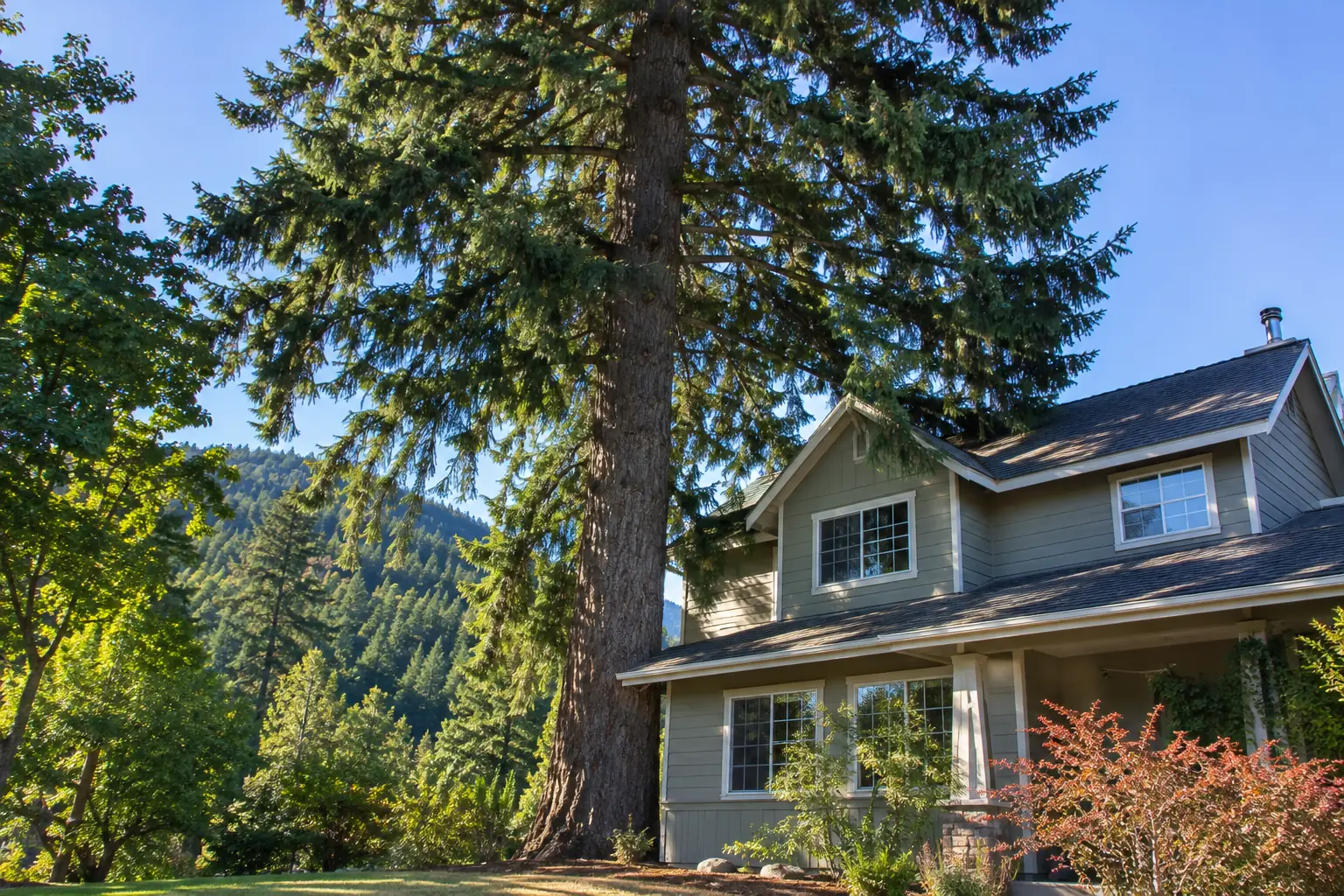
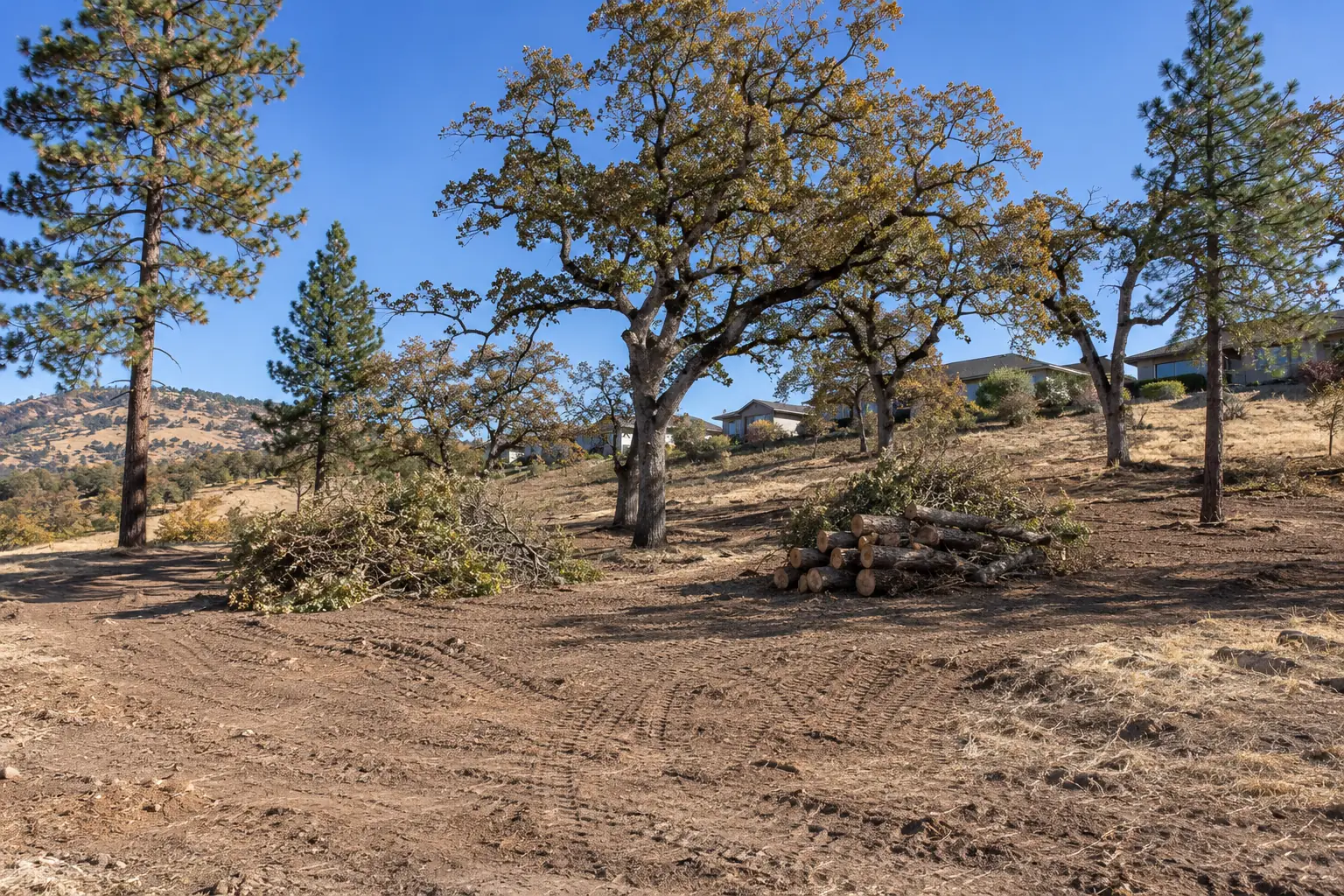
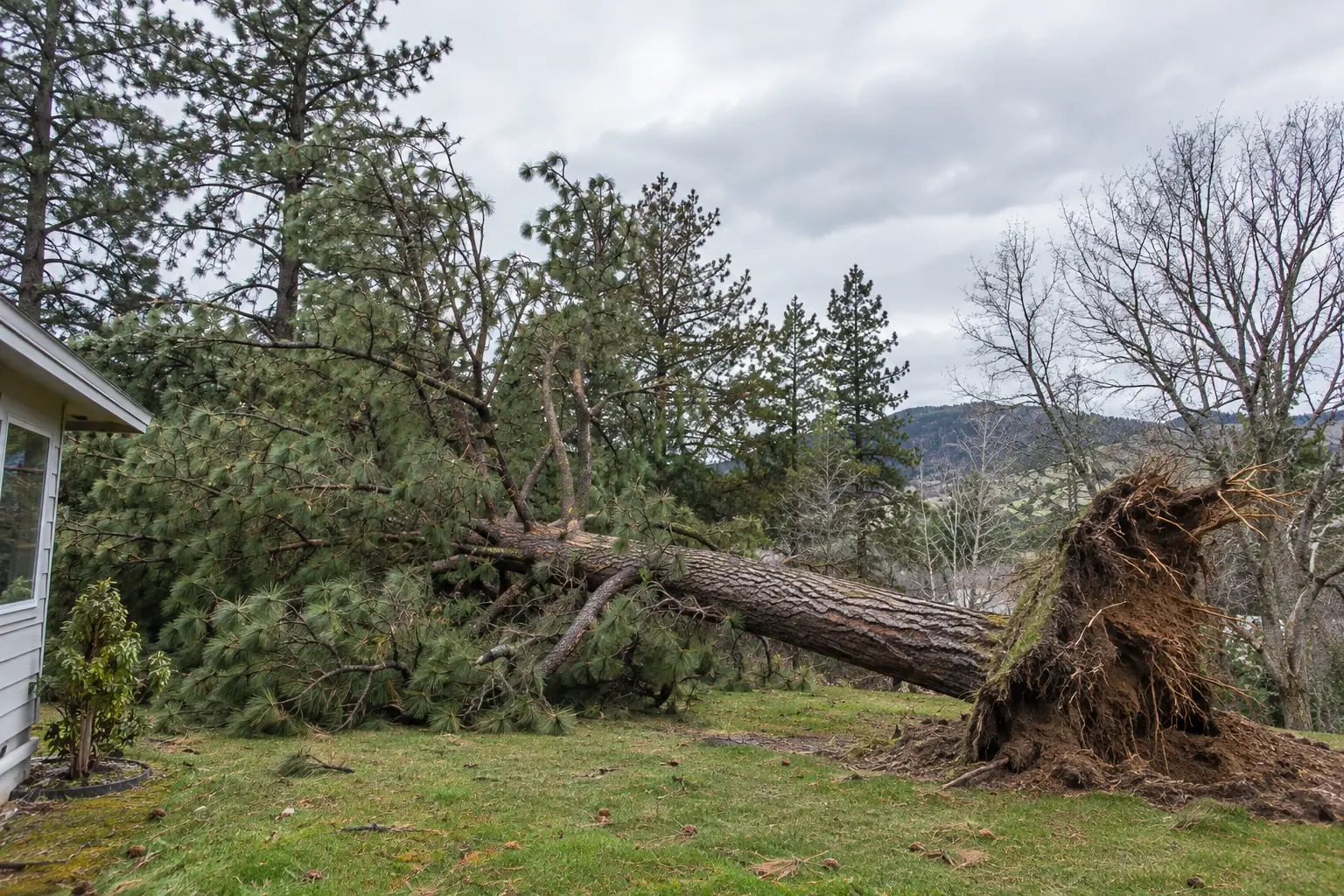
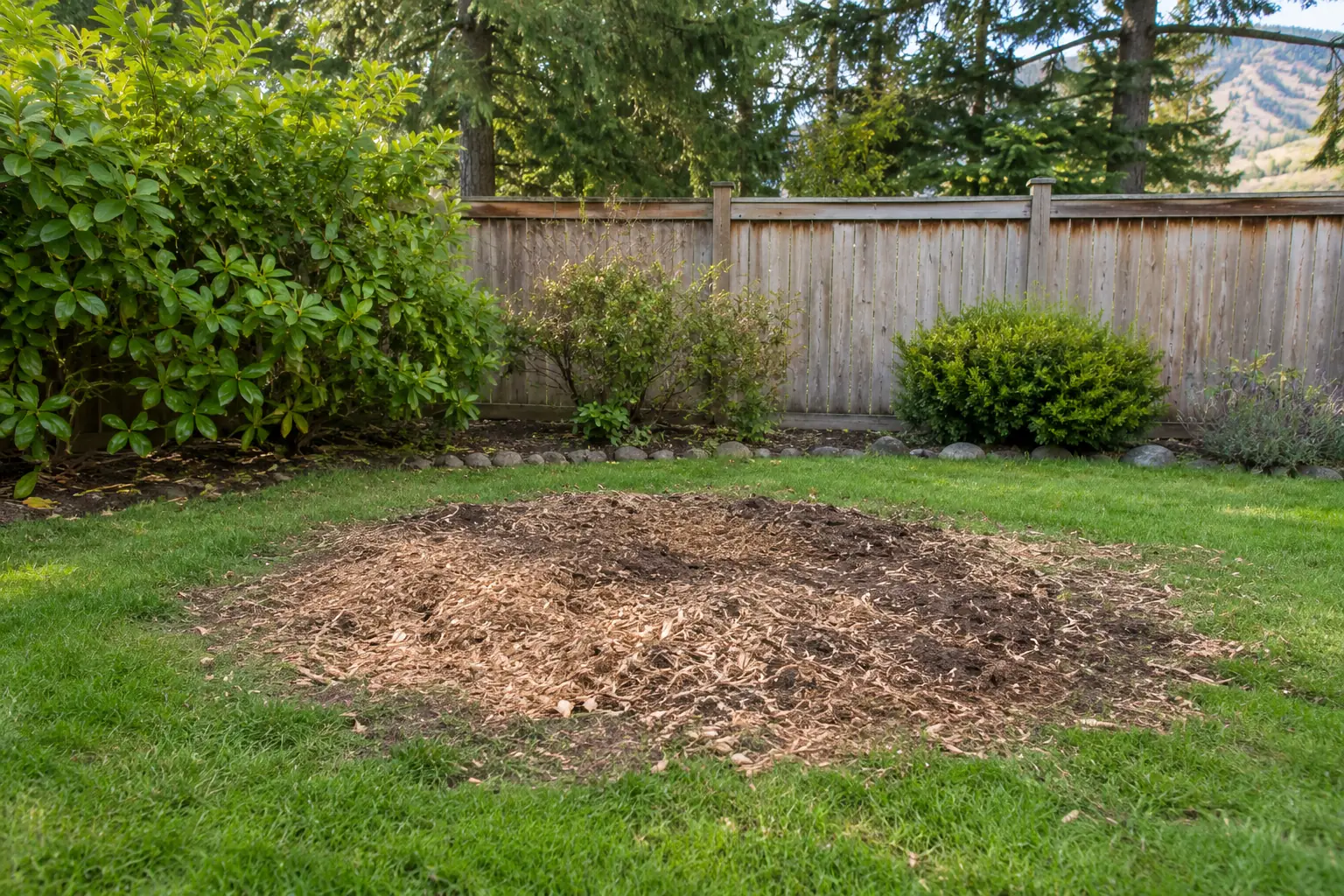
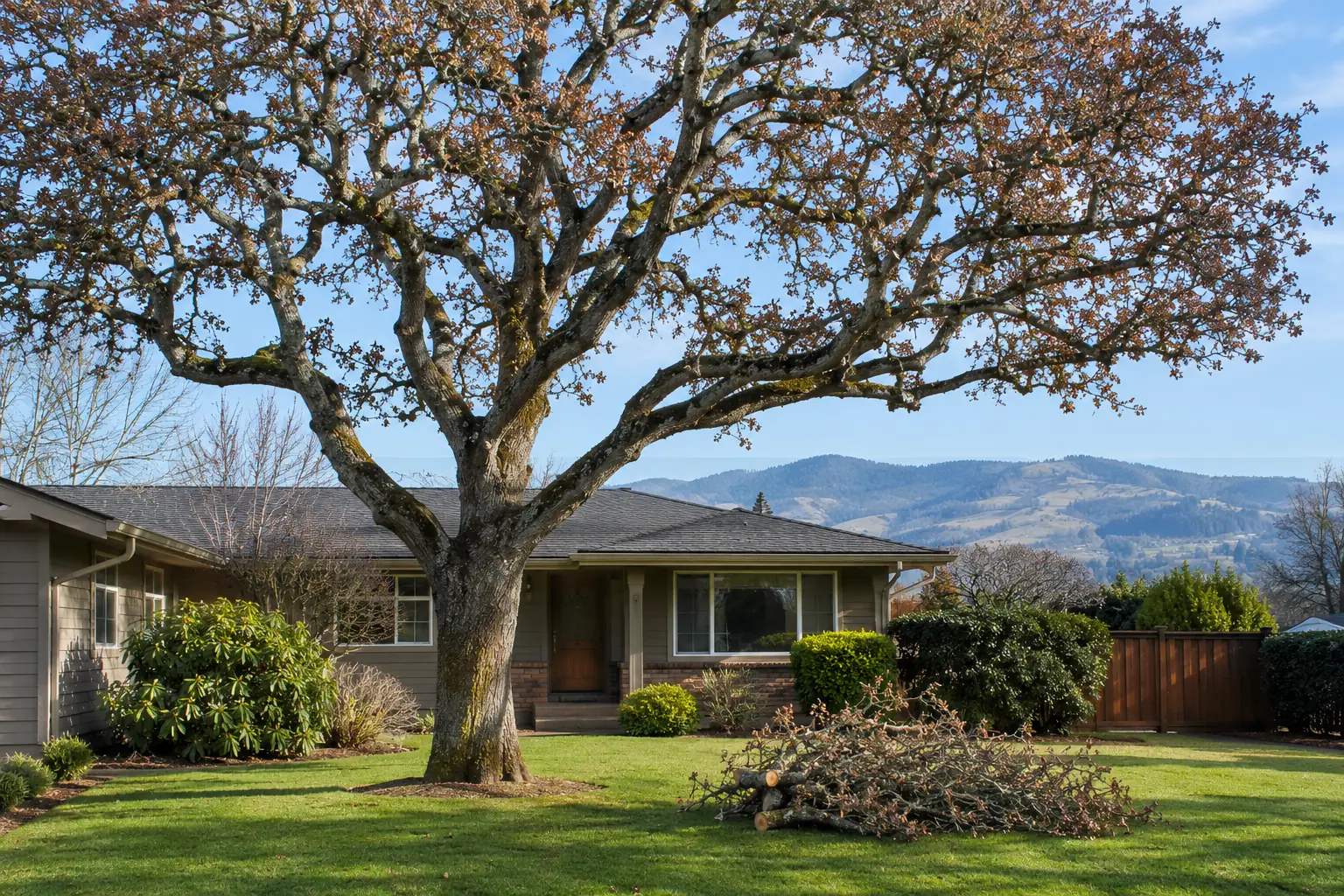
Which page fits your tree
Pick the page that matches what you see. Each one explains the job, what affects the price and what to ask before work starts.
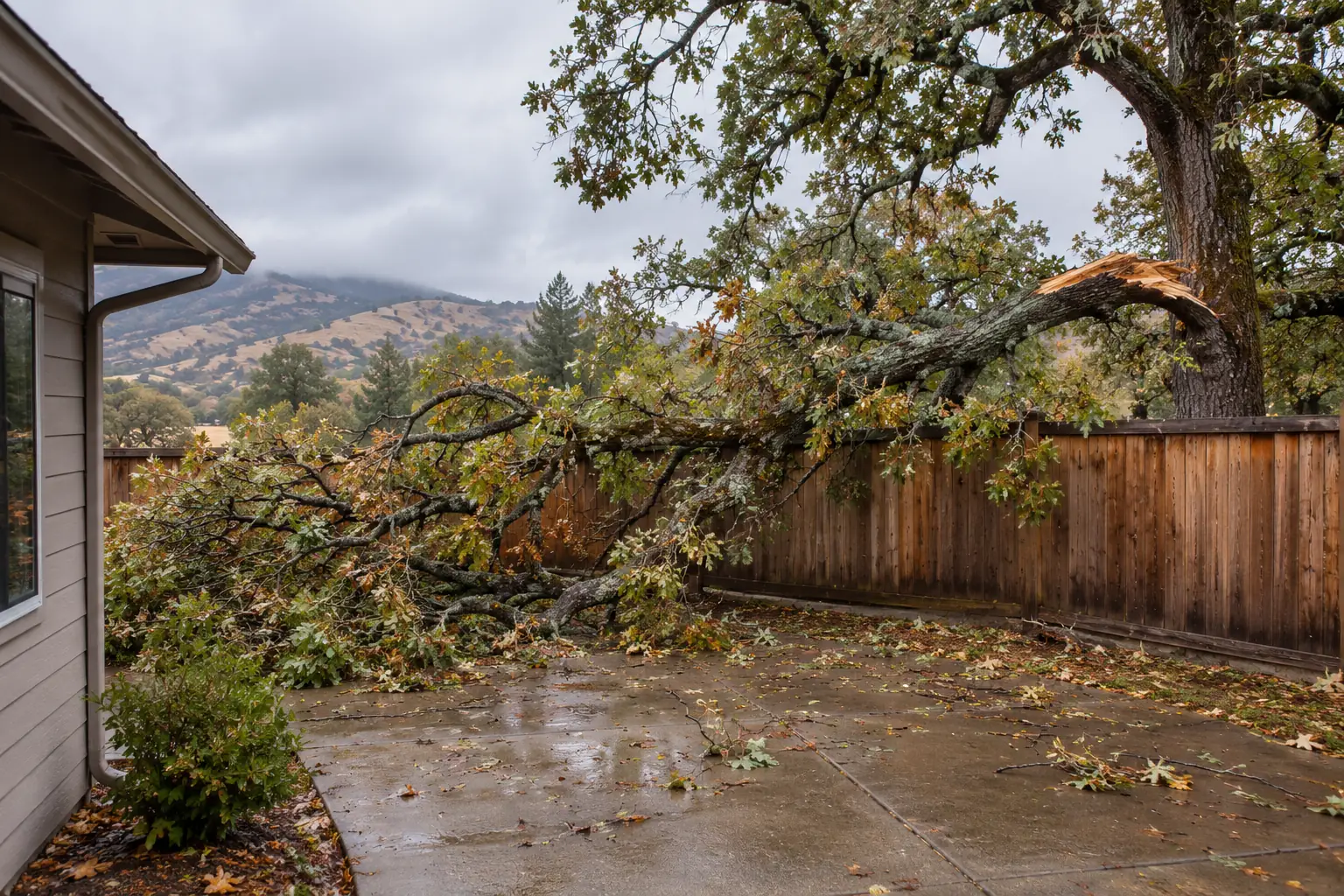
- A tree or limb came down on something, or it is blocking your way out: emergency tree removal.
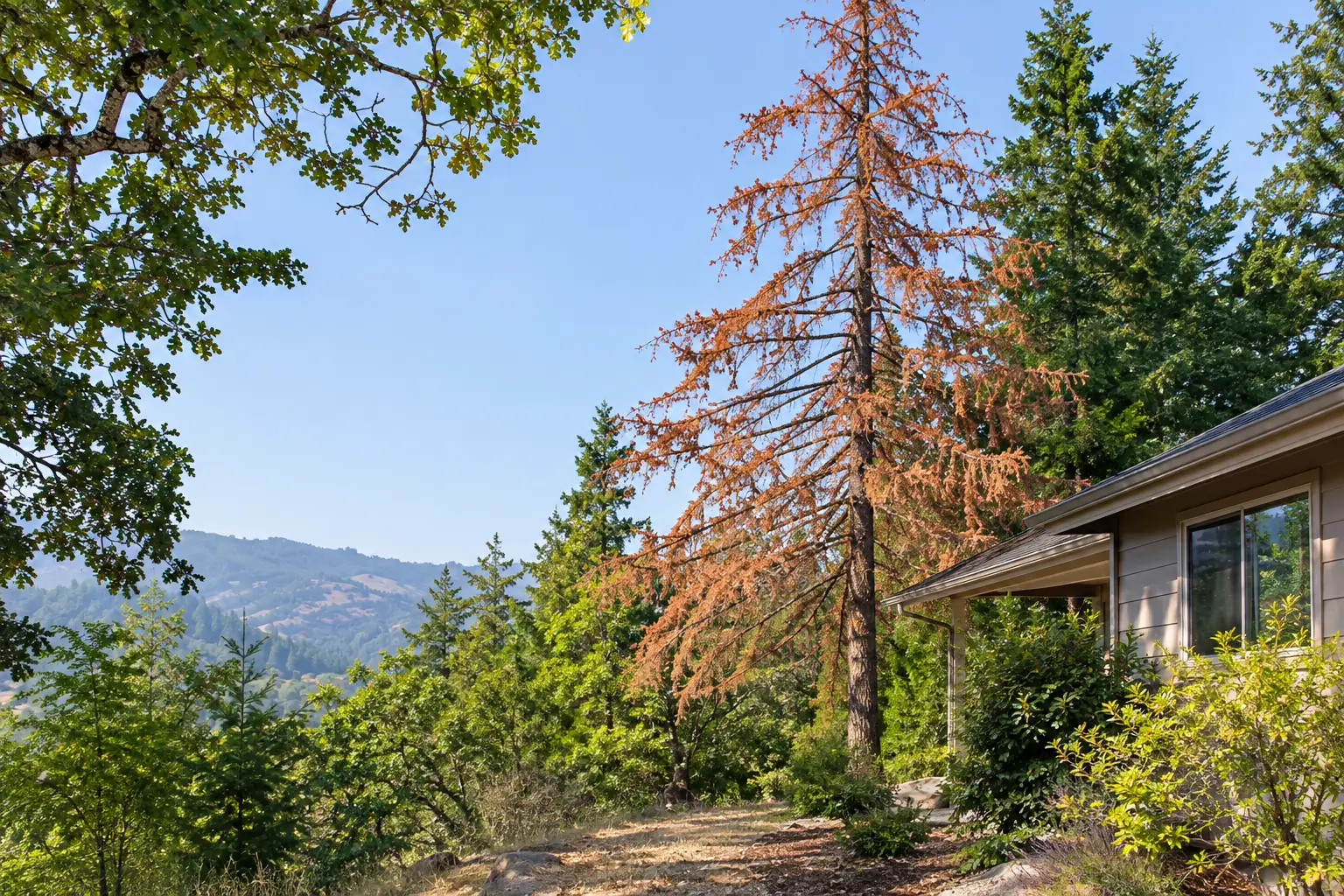
- The tree is dead, cracked, leaning or rotting at the base: hazard and dead tree removal.
- Wind, snow or ice split or uprooted it: storm damage tree removal.
- A tall pine, fir or oak stands close to the house, garage or power drop: large tree removal near homes.
- The tree is gone but the stump is in the way: stump grinding.
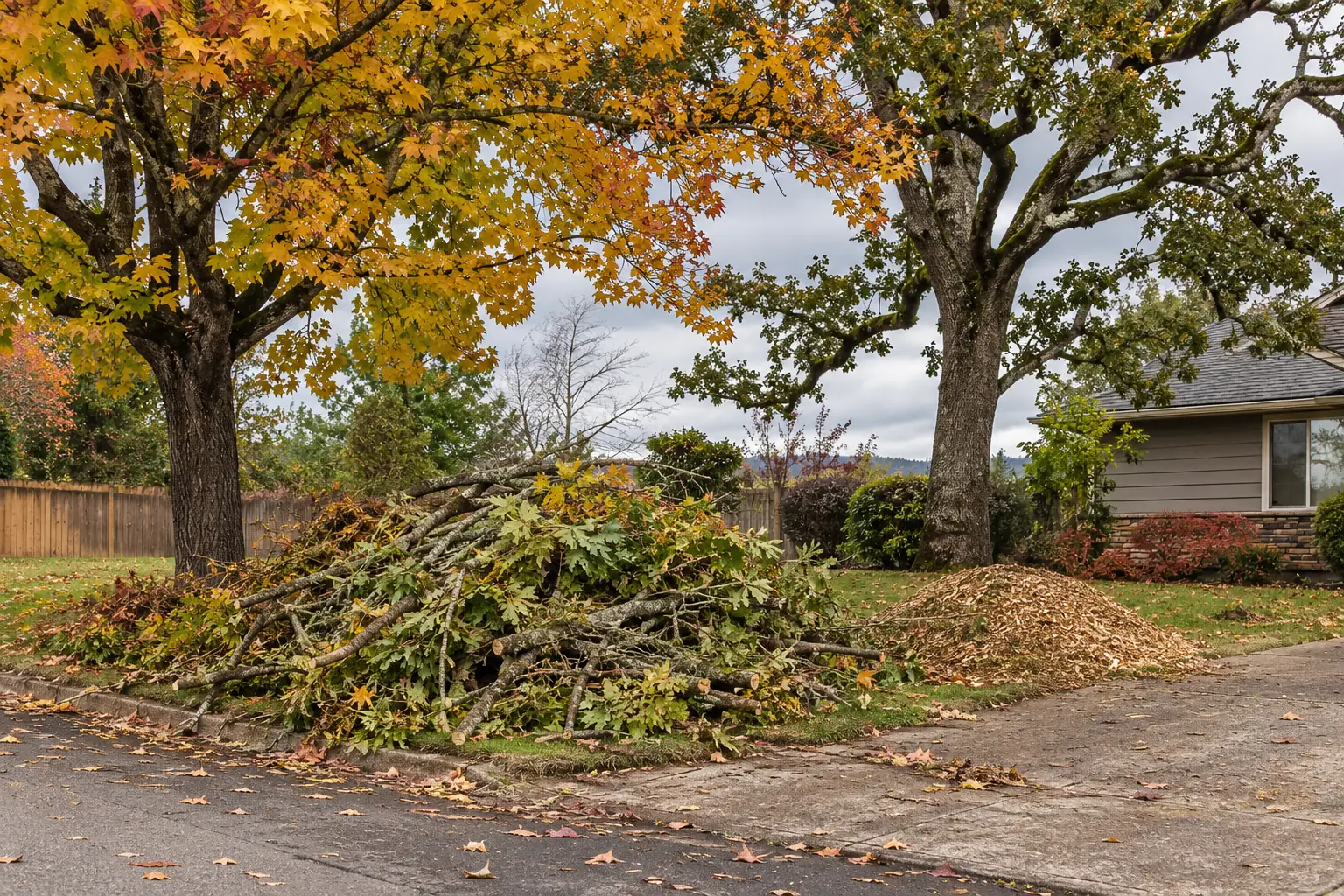
For jobs short of a full removal, see tree trimming and pruning, lot and land clearing and brush and debris removal.
Not sure which one it is? Call anyway. Describe what you see, and the company will tell you what it needs.
How the services differ
Emergency removal is about speed and safety. A tree on a roof, car or fence, or one blocking a driveway, needs a crew that can make the site safe before anything else. With power lines in the picture, 911 and Pacific Power are called ahead of any tree company, because the utility has to make the line safe first.
Hazard and dead tree removal is planned work. The tree is still standing, but it is dead, diseased, cracked or leaning toward something it could hit. There is usually time to get an estimate, check permit rules and schedule the job.
Storm damage removal sits between the two. Some storm jobs are emergencies. Others, such as a split leader or a broken top that is not threatening anything, can wait a day or two for a proper look.
Large tree removal near homes is about how the tree comes down. A tall conifer beside a house usually cannot be felled in one piece, so crews take it down in sections with ropes, a bucket truck or a crane. Access and what sits underneath drive the price.
Stump grinding finishes the job. It grinds the stump below the surface so you can mow, plant or build over it. It is often quoted together with the removal.
What changes the price
The same few things move the price on every job: the tree's height and trunk size, how close it is to buildings and lines, whether a truck can reach it, whether it is dead or hazardous, and whether you want the wood and stump gone. The Medford cost guide gives published ranges with their sources. The written estimate from the company is the number that counts.
Before you call
Have a few details ready so the call is quick:
- The town and where the tree is on the property.
- Roughly how tall it is and what kind of tree it is, if you know.
- What it is close to: the house, a fence, a shed, power lines, a septic system.
- Whether a truck can drive close to it.
- Whether you want the stump ground and the wood hauled away.
Rules to check first
Some trees need a permit before they come down. In Medford, street trees in the planter strip need a free city permit, and nearby cities such as Ashland and Jacksonville have their own rules. Read whether you need a permit and the page for your town. If branches are growing toward a power line, read trees near power lines first. When a trunk or limb is resting on the wire itself, keep well away and dial 911, then Pacific Power at 1-877-508-5088.
Questions to ask the company
- What is your CCB license number? Check it on the Oregon CCB license search.
- Can you show proof of liability insurance?
- Does the estimate include cleanup, hauling and the stump?
- How will the tree come down, and what protects the house, fence and lawn?
- Who handles any permit the job needs?